FAQs
Questions we get asked
Mostly asked standing on somebody's driveway. Written down here so you can read them first.
The material
What exactly is a crushed shell driveway?
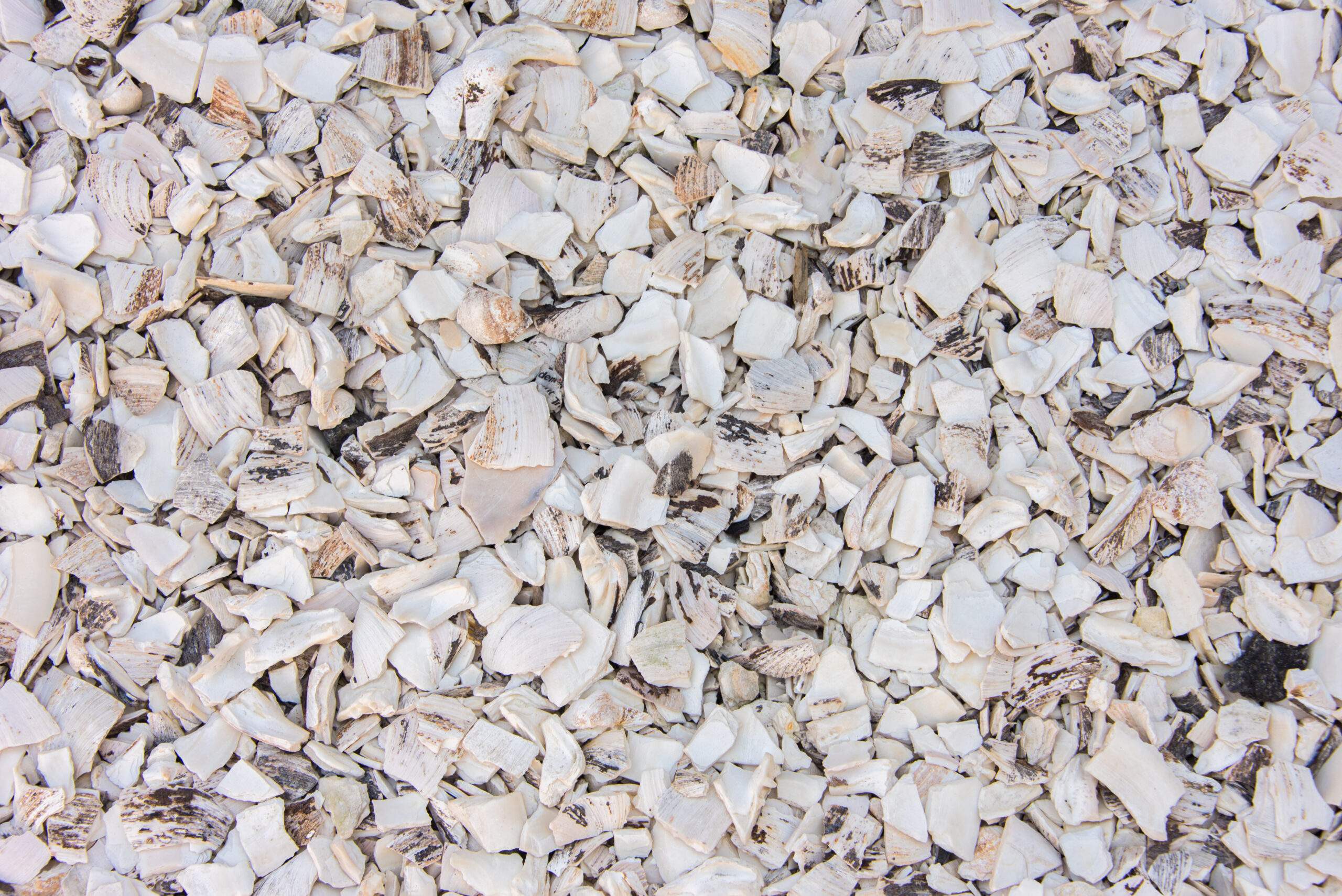
A loose surface driveway where the top layer is crushed seashell rather than stone, sometimes called a shell gravel driveway because it is laid the same way gravel is. It goes down over a compacted gravel base, the same way a gravel driveway does. A bulk load is usually a mix of quahog, clam, scallop and sometimes oyster, depending on what the supplier has running. It arrives pre-washed, so it does not carry any smell with it.
Shell or crushed stone: which should I choose?
Different rather than better, and they cost about the same once the base work is counted. The useful distinction is how each one fails: crushed stone spreads and opens into potholes, while shell keeps breaking down small and packs tighter over time. On a reasonably flat driveway shell usually gives less trouble and looks better doing it. On a slope, or anywhere cars turn hard in the same spot every day, angular three quarter inch stone holds where shell migrates. We install both, and we will tell you which one we think suits your driveway once we have seen it.
Is crushed stone the same as gravel?
In conversation, usually yes, but there is a real difference worth knowing. Crushed stone has been mechanically broken, so every piece has sharp angular faces that wedge against its neighbors and hold. Natural gravel is rounded by water, so the pieces roll past one another and spread. That is why a compacted stone driveway stays put and a rounded pea gravel one keeps migrating toward the edges.
What color is it, and does that change?
It starts bright, somewhere between off-white and pale cream, with gray and faintly pink flecks through it. It weathers down over the first year or two to a softer, greyer tone as it compacts and picks up dust. Most people find they prefer it after it has settled.
What size crushed stone is right for a driveway?
Three quarter inch is the size that works for a residential driveway, and it is what we install. Smaller stone moves too easily underfoot and washes in heavy rain. Larger stone is uncomfortable to walk on and never really beds in. Three quarter inch is big enough that the angular faces lock against each other and small enough to drive and walk on without noticing it.
Building it
Can I put crushed stone over an old shell driveway, or the other way round?
Usually yes, and it is often a sensible way to change the look without starting again. What matters is the same as ever: whether the base underneath is sound. If it is, the old surface becomes part of the base and the new material goes over the top. If there is no base, changing the surface will not fix anything and the problems come straight back.
How deep does it need to be?
Roughly three inches of shell on top, laid in two compacted lifts rather than one deep dump. Under that you want five to six inches excavated out and replaced with compacted gravel base. The base is the part that carries the cars. Shell laid straight onto soil presses down into it and stops being a driveway.
How long does a job take?
A straightforward residential driveway is usually a short job rather than a long one, but it depends on how much has to come out, whether drainage needs correcting, and how easily a truck can reach the site. We will give you a realistic timeframe when we look at it.
Do you do walkways and paths as well as driveways?
Yes, in either material. A shell or crushed stone walkway is the same job as a driveway in a narrower strip, and the same things decide whether it lasts: a compacted base underneath, a grade that sheds water, and an edge holding the material in. A path takes less weight than a driveway, so it does not need the same depth, but it still needs a base. Laid straight onto soil it will sink into the lawn within a season.
Can you put shell over my existing driveway?
Sometimes. If there is a sound compacted base under what is there, a regrade and a fresh top-off is often all it needs. If the base has gone, or the driveway has never had one, adding shell on top buys a season and then the same problems come back. Worth having someone look before assuming either way.
Do you deliver shell without installing it?
No. We install what we deliver. Shell tipped on a verge without a prepared base underneath tends to become an expensive problem rather than a driveway, so we would rather do the whole job or none of it.
Living with it
Will weeds grow through it?
Far less than through gravel. The sharp edges make a poor seedbed and the surface drains fast, so it is an unfriendly place for seeds to start. You will still get the occasional one at the edges where soil creeps in, but you are not fighting the driveway every summer.
Can you plow snow on it?
Yes, with a lighter hand than on asphalt. The blade wants setting slightly high so it takes the snow without scraping shell off into the lawn with it. Anyone who plows loose-surface driveways regularly will know to do this.
Is it uncomfortable to walk on?
Barefoot, yes. It is sharp, and that is the honest downside. In shoes it is fine. If people routinely go from the house to the car without shoes on, it is worth thinking about a stone or paver path through it.
How much upkeep is it?
A rake now and then to pull material back off the edges and even out the wheel tracks, and a top-off every few years as the surface thins and compacts down. Less work than a gravel driveway, more than pavement.
Will the shell end up in my lawn?
Not if the edges are done properly. Shell spreading into grass and beds is almost always an edging problem. Cobblestone, timber or steel set at the right height holds the line, and the surface should sit just below that line rather than heaped proud of it.
Working with us
What does it cost?
It depends on the driveway, and shell and stone land close to each other once the base work is counted, so we would rather look than quote a number that turns out to be wrong. The things that move it most are the area, how much material has to come out and go away, whether the existing base can be kept, how easily a truck can reach the site, and whether edging is going in.
Which towns do you cover?
Bourne through Orleans, and everything in between: Sandwich, Falmouth, Mashpee, Barnstable, Yarmouth, Dennis, Brewster, Harwich and Chatham. If you are just outside that stretch, call anyway and we will tell you straight whether we can get to you.
Do you charge for an estimate?
No. We come out, walk the driveway with you, and tell you what it actually needs, including if that turns out to be less than you were expecting.
Still looking? There is more on how we work, what decides the cost, and a full list of every page.
Get an estimate
Still not sure what yours needs?
Every driveway is a bit different. Easiest thing is to have someone come and look at it. That part is free.
- Free, with no obligation after
- We look at the base, not just the surface
- Across Bourne to Orleans