Crushed shell driveways
The bright white driveway the Cape is known for. Installed new, or refreshed and regraded when it has thinned out.
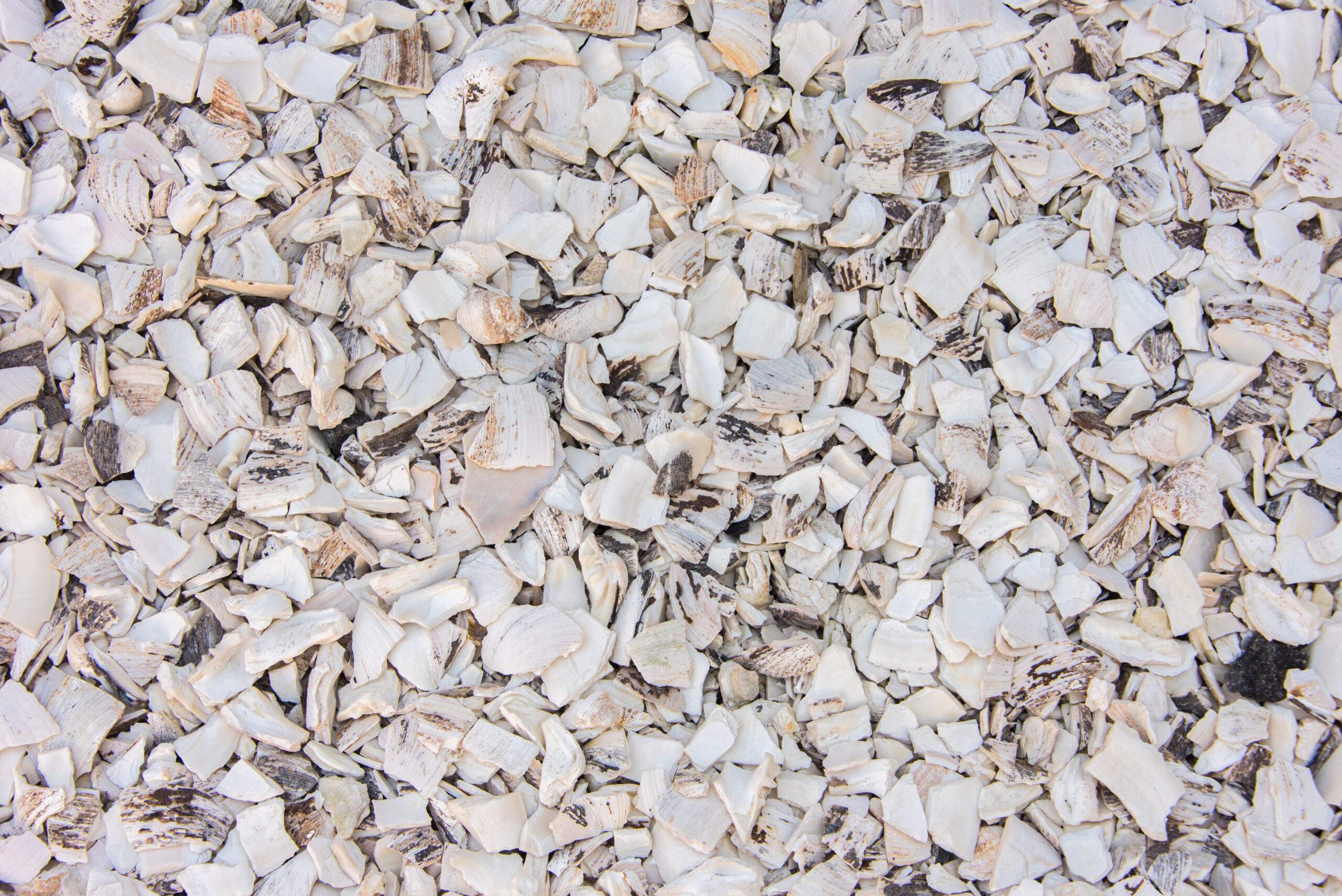
A driveway that stays where you put it
Crushed shell or crushed stone over a properly compacted base, laid in lifts and edged so it stays on the driveway instead of in your lawn. New driveways and refreshes, Bourne to Orleans.
What we do
Two materials, crushed shell and crushed stone, and the same underlying work behind both: get the ground right, then put the surface on it. Driveways mostly, and walkways and paths in either material where a property wants one.
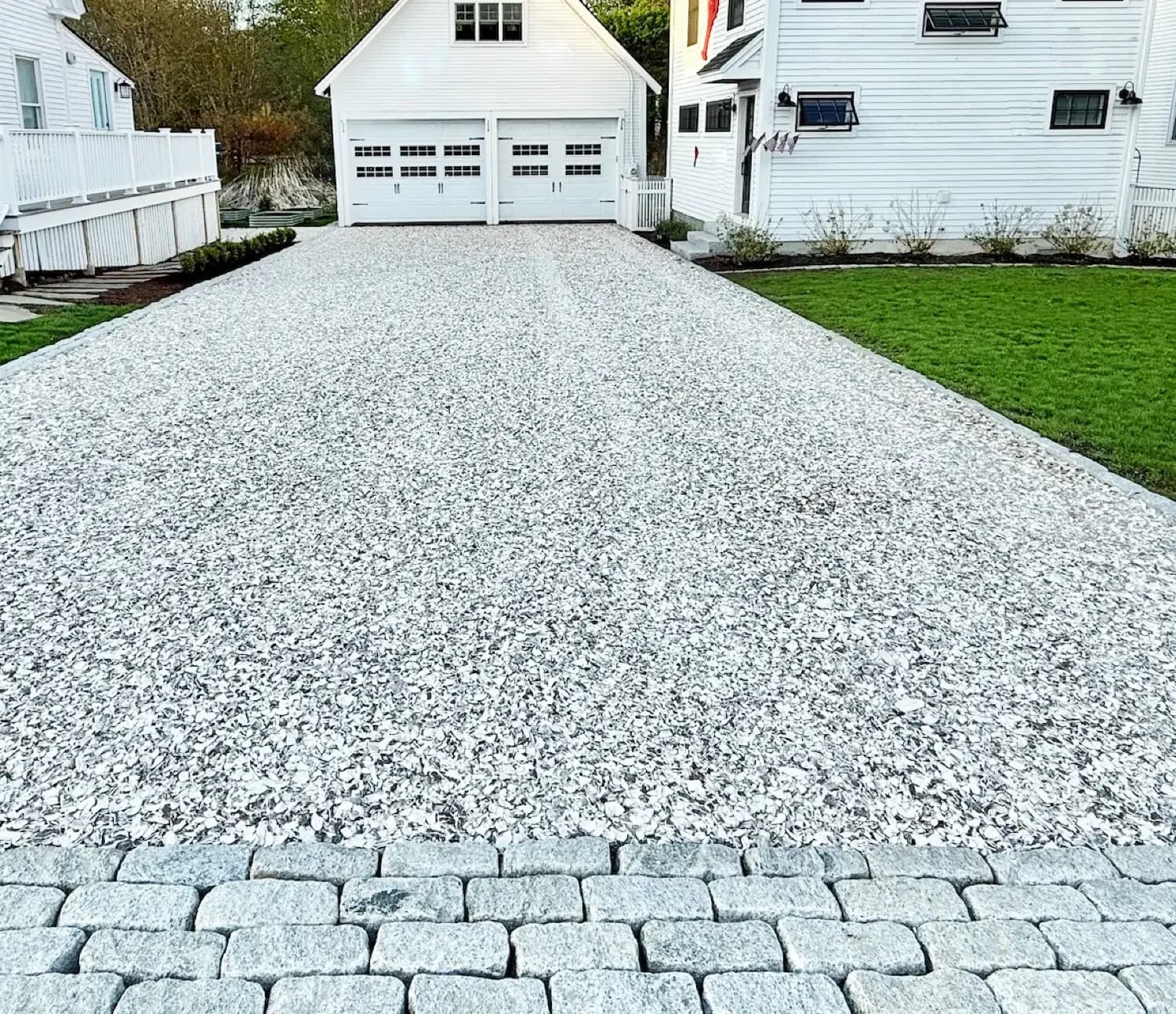
The bright white driveway the Cape is known for. Installed new, or refreshed and regraded when it has thinned out.
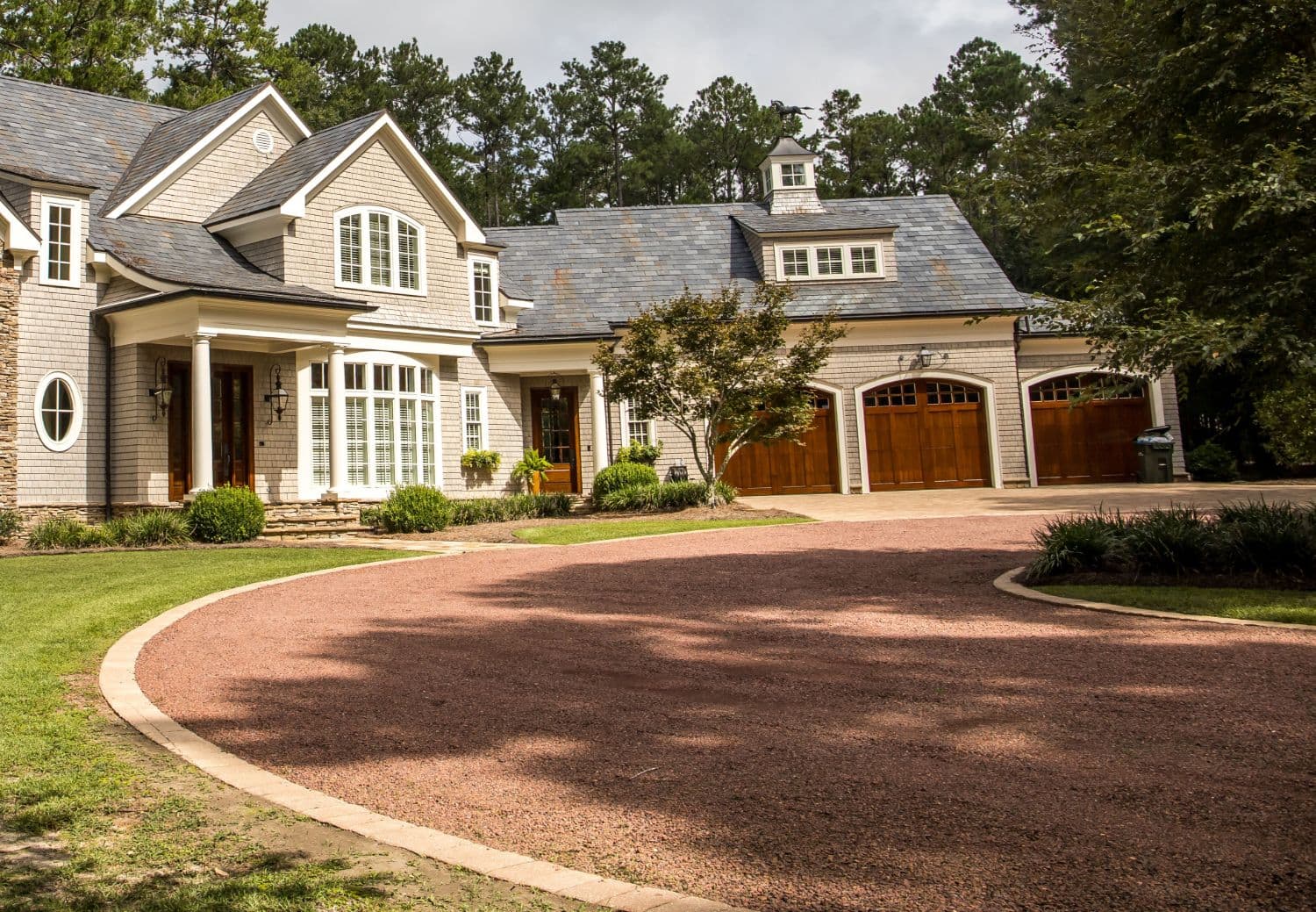
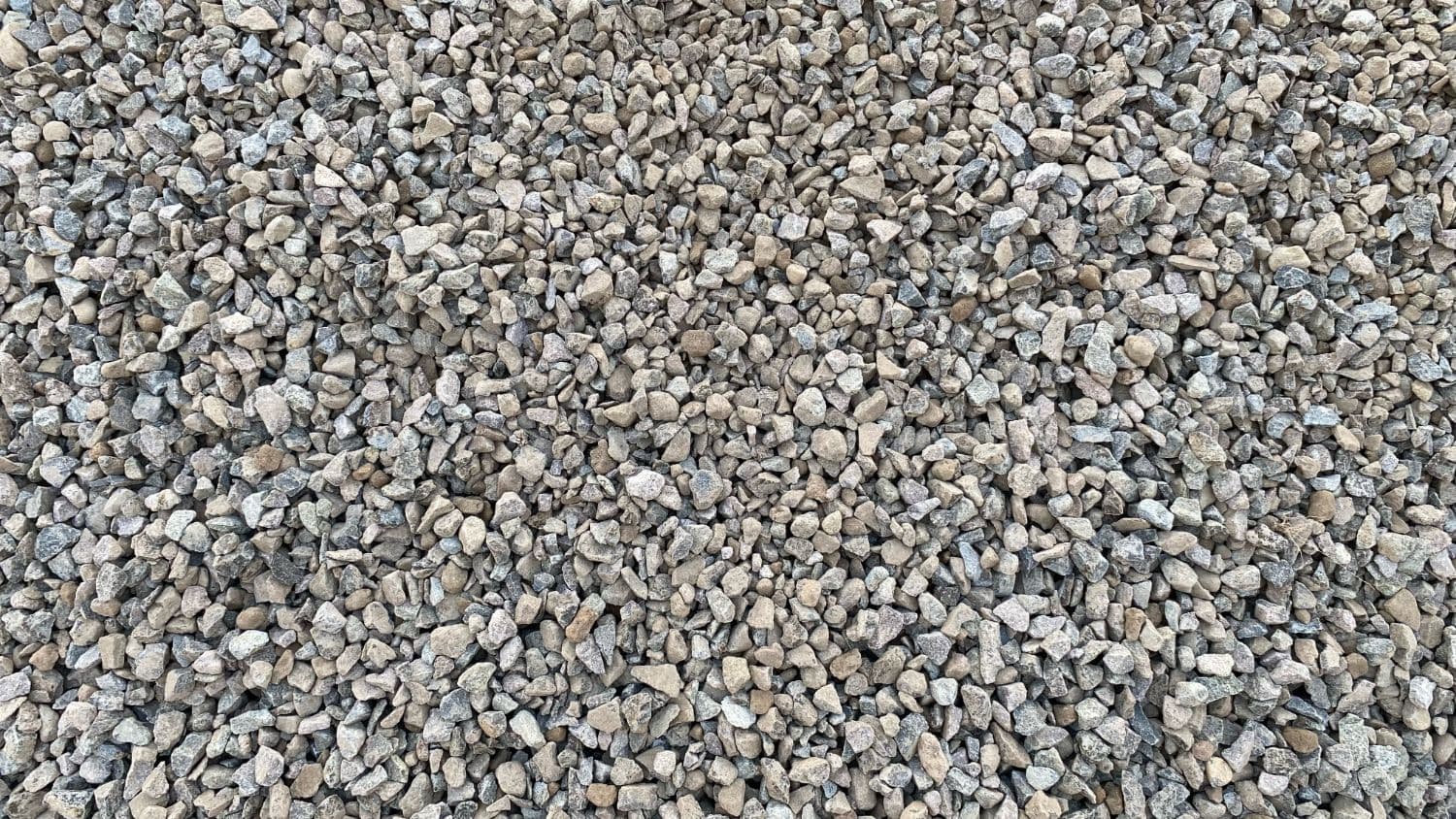
Angular stone that locks together and holds a slope. Three quarter inch stone, installed new or brought back when it has spread and potholed.
The materials
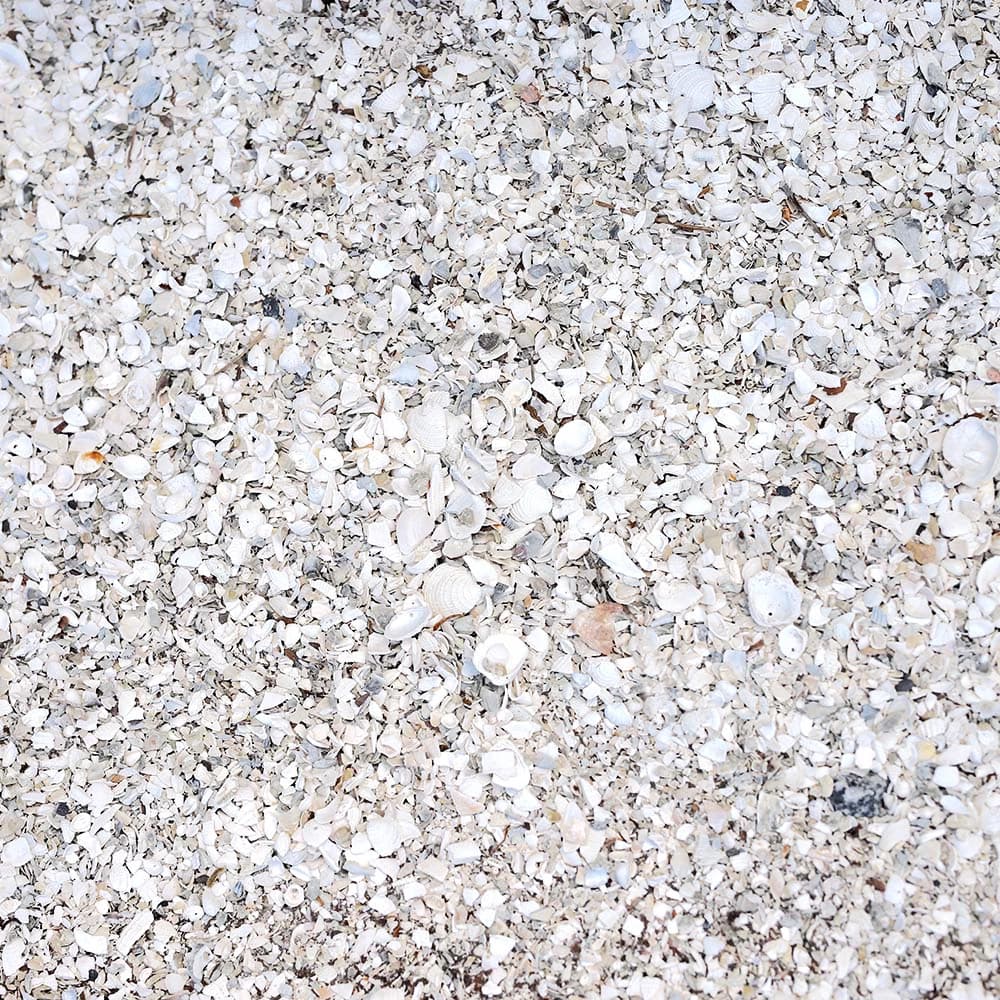
Crushed shell arrives in bulk and pre-washed, so there is no smell to it once it is spread. A load is normally a mix of whatever the supplier has running, which is why you will hear the same driveway called a seashell driveway, a clam shell driveway or a crushed oyster shell driveway depending on who is describing it. We do not promise a single species, because nobody honestly can.
It goes down bright, which is where the name white shell driveway comes from, somewhere between off-white and pale cream, and weathers to a softer gray over the first year or two as it compacts and takes on dust. Against cedar shingle and grass it does something no other driveway material quite manages, which is most of the reason people want it.
Crushed stone is the other half of what we lay. We use three quarter inch, the size that suits a residential driveway: small enough to walk and drive on comfortably, large enough that the pieces lock against one another rather than rolling apart under a tire. It goes down gray and stays gray, and it holds ground that shell will not.
Choose from
We install both, and they cost about the same once the base work is counted, which is the larger part of either job. So the choice is genuinely about how the driveway is used and how you want it to look.
Brighter, softer underfoot to look at, unmistakably Cape Cod
Where it struggles: slopes, and anywhere cars turn hard in the same spot. It is also sharp barefoot, which you will notice if people walk from the house to the car without shoes.
Angular, locks together, holds ground shell will not
Where it struggles: it opens into potholes where water sits, and it might need some moving back into shape more often than shell does.
Both might need raking now and then and a top-off every few years. Both plow fine with the blade set a touch high. If your driveway is reasonably flat, shell will usually give you less trouble and look better doing it. If it is steep, or cars swing hard in the same place every day, stone is the safer answer.
Get a free estimateNot only driveways
A walkway is the same job as a driveway in a narrower strip, and it goes wrong in the same ways. The thing that decides whether it lasts is still the base underneath, the grade that moves water off it, and an edge holding the material where you put it.
What changes is depth. A path takes footsteps rather than cars, so it does not need what a driveway needs. It does still need a base. Laid straight onto soil it sinks into the lawn within a season, and then you are pulling it out of the grass every time you mow.
Edging matters more on a path than on a driveway, simply because there is more edge for every square foot of surface. On a narrow walkway the edge is most of what you see, so it is worth doing properly in cobble, granite or steel.
Cost
We would rather look than quote a number that turns out to be wrong, because these are the things that move it, and none of them show up on a satellite photo.
The square footage of the driveway, and how much of it takes vehicle weight versus just looking tidy.
Excavation and hauling away the old surface is often a bigger share of the job than the shell itself.
If there is sound compacted base under what is there, we can build on it. If not, it has to be built.
Whether a truck can get in and turn around. Tight lanes and long carries add time.
Whether water is already going where it should, or whether the grade has to be corrected first.
Cobblestone, granite, timber or steel, and how many linear feet of it the driveway needs.
Get an estimate
Tell us the town and roughly how big the driveway is. We will come and walk it rather than quote off a satellite photo, and tell you straight whether it needs doing at all.
Questions
A loose surface driveway where the top layer is crushed seashell rather than stone, sometimes called a shell gravel driveway because it is laid the same way gravel is. It goes down over a compacted gravel base, the same way a gravel driveway does. A bulk load is usually a mix of quahog, clam, scallop and sometimes oyster, depending on what the supplier has running. It arrives pre-washed, so it does not carry any smell with it.
Three quarter inch is the size that works for a residential driveway, and it is what we install. Smaller stone moves too easily underfoot and washes in heavy rain. Larger stone is uncomfortable to walk on and never really beds in. Three quarter inch is big enough that the angular faces lock against each other and small enough to drive and walk on without noticing it.
Sometimes. If there is a sound compacted base under what is there, a regrade and a fresh top-off is often all it needs. If the base has gone, or the driveway has never had one, adding shell on top buys a season and then the same problems come back. Worth having someone look before assuming either way.
Different rather than better, and they cost about the same once the base work is counted. The useful distinction is how each one fails: crushed stone spreads and opens into potholes, while shell keeps breaking down small and packs tighter over time. On a reasonably flat driveway shell usually gives less trouble and looks better doing it. On a slope, or anywhere cars turn hard in the same spot every day, angular three quarter inch stone holds where shell migrates. We install both, and we will tell you which one we think suits your driveway once we have seen it.
Roughly three inches of shell on top, laid in two compacted lifts rather than one deep dump. Under that you want five to six inches excavated out and replaced with compacted gravel base. The base is the part that carries the cars. Shell laid straight onto soil presses down into it and stops being a driveway.
It depends on the driveway, and shell and stone land close to each other once the base work is counted, so we would rather look than quote a number that turns out to be wrong. The things that move it most are the area, how much material has to come out and go away, whether the existing base can be kept, how easily a truck can reach the site, and whether edging is going in.
Guides
The short answer is about three inches of shell over a compacted base, but the depth people usually get wrong is the one underneath.
They cost about the same and go in the same way. The difference shows up two or three years later, in how each one fails.